
Franklin County VINE Coverage
Kansas Victim Information and Notification Everyday, usually called Kansas VINE, is a free and confidential custody-information service. It operates around the clock and covers adults in participating Kansas county jails. Franklin County's implementation is locally documented. Users may search online through VINELink, use the mobile app, or call 1-866-574-8463. TTY service is available at 1-866-847-1298, and live help supports many languages.
The service tracks custody events supplied by participating county facilities. Official materials identify release, transfer, and escape among the events that can prompt notice. Those events are not interchangeable. Release may mean the person left county custody, while transfer means another agency took custody. An escape notice is neither a lawful release nor proof that a case ended. The event text and the Franklin County jail record must be read together.
Check a Franklin County Inmate
Begin at VINELink and search for one adult, not for a general Franklin County release list. A name alone can produce uncertain matches. Add known identity details, then compare the returned facility and identifiers before relying on the custody status. If two people share a name, do not guess. Contact Adult Detention with a date of birth or booking number and ask staff to distinguish the records.
- Select Kansas from the state directory and choose “Find an Offender.”
- Enter the adult's name and any known identifying details.
- Open the matching result only after checking the listed facility and identity.
- Read the current custody status and event wording exactly as displayed.
- If no match appears, try a known spelling or call Franklin County Adult Detention at 785-229-1220.
A missing result does not establish release. The name could be spelled differently, data may lag, the person may have transferred, or the record may fall outside this service. The full Franklin County released inmate search uses jail contact, the release record, court entries, and the correct receiving-agency system when VINE alone is unclear.
Franklin County VINE Result Fields
Kansas materials promise custody and status information, but they do not promise one permanent historical label for every released result. The live interface controls. Record the exact words and the time of the notice. Do not turn a missing profile or a changed screen into an invented release date.
| Result element | How to read it |
|---|---|
| Identity | Use available identifiers to separate namesakes. |
| Facility | Shows which participating county custodian supplied the current record. |
| Custody status | Describes the status available at the time of the lookup. |
| Release event | Signals an end to that custody episode, subject to agency confirmation. |
| Transfer event | Signals a new custodian, not release to the community. |
| Escape event | Reports an unauthorized custody change, not legal release. |
The manifest capture shows the official VINELink entry point used for a Franklin County check.
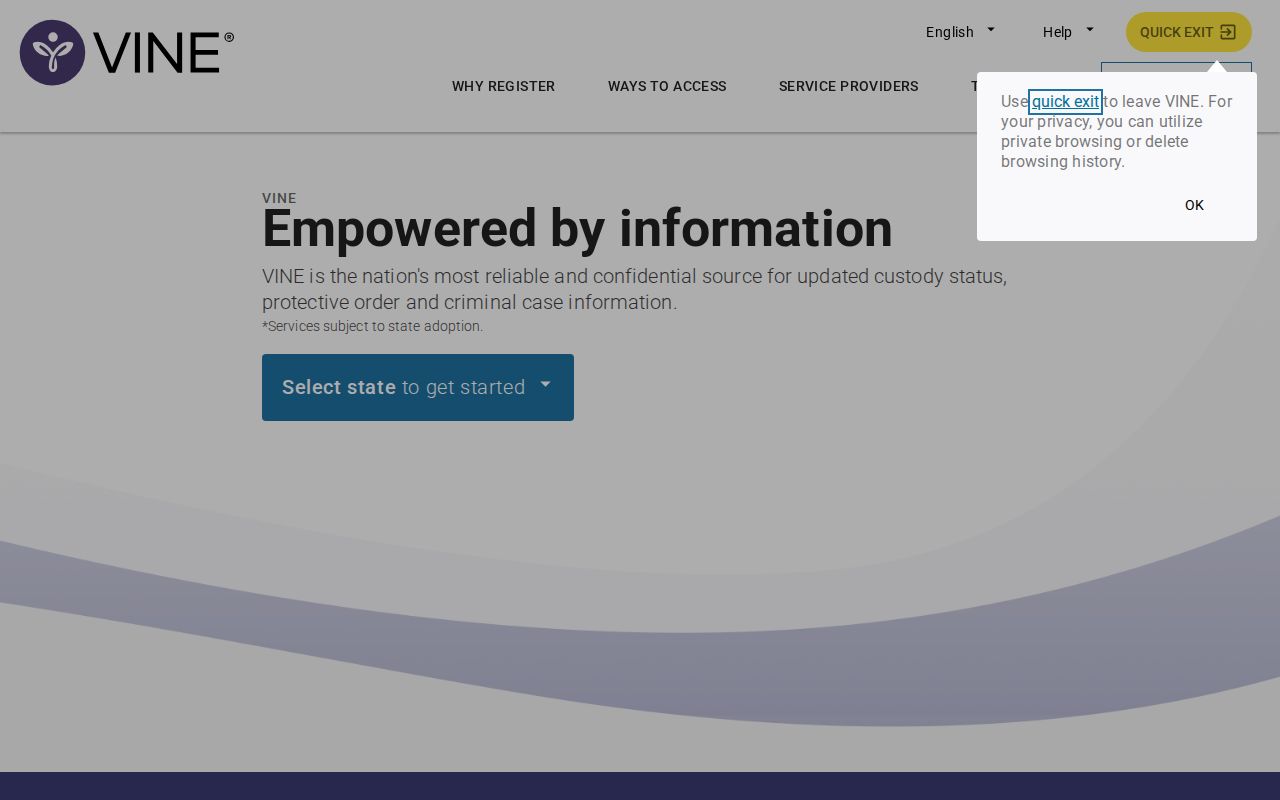
The screen is an access point for a specific-person search and prospective alerts, not an official Franklin County release archive.
Register Franklin County Release Alerts
Registration is prospective. In plain terms, it is meant to watch a person who is still in the participating jail. It may no longer be offered after the person has left custody. Search first, verify the correct result, and register while the person is shown in custody. Available channels can include phone, email, text, or in-app notice, depending on the options on the live screen.
- Open the verified Franklin County custody result.
- Choose “Register for Notifications” while registration remains available.
- Select the phone, email, text, or in-app channels shown.
- Create a four-digit PIN for a phone registration and save the confirmation.
- When a call arrives, listen and enter the PIN followed by the pound sign to acknowledge it.
Email registration does not require the phone PIN. More than one number or address may be registered, but a switchboard is a poor choice because the system must reach the registrant. Unanswered calls may be retried for up to 24 hours until acknowledged. If the PIN is lost, call the VINE program number and press 0 for a live operator.
Notification is a warning mechanism, not a court record. Telephone or network problems can delay delivery. Keep the direct jail number available and do not rely on an alert as the sole proof of a release destination.
Release or Custody Transfer
A Franklin County booking can end in several ways. The person may leave on bond, a court order, time served, or sentence completion. The jail may instead transfer the person to KDOC, another county, federal custody, or ICE. VINE can report a custody change, yet that brief event cannot always explain where the person went next.
| What VINE reports | Best confirmation |
|---|---|
| Release | Ask Adult Detention for the release date, time, and disposition. |
| Transfer | Ask for the receiving agency, then use that agency's locator. |
| No result | Call the jail and check spelling, timing, and jurisdiction. |
| County record ended | Review Franklin District Court or Ottawa Municipal Court for legal authority. |
Franklin County does not publish a verified online roster or historical release feed. Contact Franklin County Adult Detention at 785-229-1220. If staff cannot provide the detail informally, request the booking sheet, custody history, release date and time, disposition, and receiving-agency field through the county's electronic KORA form.
VINE Excludes KDOC Releases
This Kansas-specific limit deserves its own check. A person transferred from the Franklin County Adult Detention Center into state custody leaves the county-jail path but has not necessarily gone home. Kansas VINE expressly excludes KDOC prisoners. Search the KASPER gateway for a state-system record and interpret the status carefully.
- Inmate
- The person is in Kansas state custody.
- Parole
- The person has physically left prison but remains under KDOC supervision.
- Discharged
- KDOC custody or supervision has ended.
- Community Corr.
- A KDOC-funded supervision category that can require direct local confirmation.
KDOC has a separate victim-notification program for eligible cases. Its scope does not replace county VINE, ordinary court probation, or local Community Corrections when KDOC is not the supervising authority.
The distinction is visible on the KDOC Victim Services page.

The separate state program confirms why a county-jail VINE search must not be presented as a statewide prison-release search.
Other Franklin Release Systems
VINE is also not a federal or immigration locator. Use the BOP inmate locator only for federal Bureau of Prisons custody. A federal pretrial defendant may instead require a court docket or U.S. Marshals record. If Franklin County reports an ICE transfer, use the ICE Online Detainee Locator and ask the jail for the receiving-agency entry. A no-result in any one system remains inconclusive.
Court records add legal context. Franklin County District Court may show bond, dismissal, sentence, probation, revocation, or discharge in a Kansas criminal case. Ottawa Municipal Court handles city-ordinance matters. A court order can explain why release was authorized, but the jail custody entry remains the stronger source for the actual exit time.
Use each system for its own role: VINELink for county-jail custody alerts, the jail record for the release transaction, court records for legal authority, KASPER for KDOC status, and federal or ICE tools after a documented transfer.
The Kansas offender registry is another separate system. It covers only people who have a legal duty to register under Kansas law. A registry result may document a qualifying person's postcustody obligations, but the absence of a result says nothing about release for an adult who has no registration duty. It should never replace the Franklin County jail record or the custody notice.
Identity checks remain essential across every channel. Compare the full legal name, aliases, birth information, booking or KDOC number, and facility. VINELink is designed for a specific adult, not for browsing a full Franklin County release population. A common name, misspelling, delayed update, or transfer can create a plausible but wrong match. When the live screen and a jail response differ, ask the jail whether the event posted later or whether another hold changed the destination.
Timing also matters. A judge may sign a release order before jail staff complete the operational exit, and a transfer can occur before the receiving system updates. Preserve the time shown in each source instead of forcing all records into one date. If VINE and the jail appear to conflict, ask whether the event was entered later, whether another hold applied, and whether the listed person was matched by date of birth or booking identifier.
For an older event, VINE should not be treated as a durable archive. Request the existing Franklin County custody record and review the relevant court case. The county open-records brochure notes that material in dead storage can take longer to retrieve. No published Franklin retention period was found, so ask whether the booking record is active, archived, or subject to a retention schedule rather than assuming it vanished at release.
A narrow verification record is usually more useful than a broad search. Ask for the booking episode, release date and time, release disposition, and any receiving agency for the named adult and approximate date. Those fields can distinguish a return home from a state, county, federal, or immigration transfer when the brief notification cannot.
Keep the notice as one part of the evidence chain. A saved alert can establish what VINE transmitted and when, while the county record explains the transaction and the court file explains the authority. That division prevents a transfer notice from being restated as release home and keeps a physical release distinct from later supervision discharge.
Public Record Search
Sponsored Results